
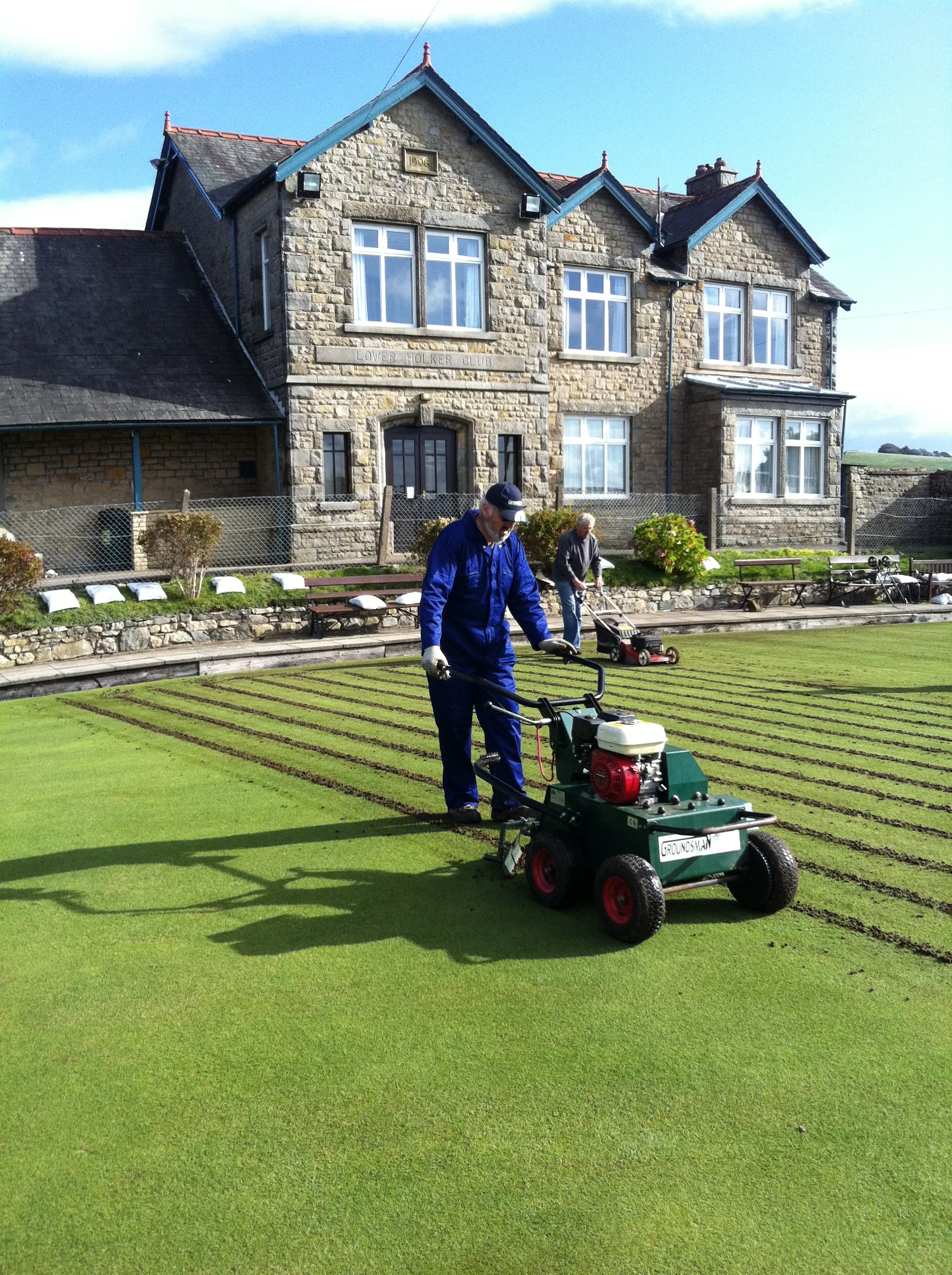
We offer a consultation service for your bowling green which can include initial assessment, recommendations for year round maintenance and key work such as Autumn renovation. We are able to give advice on dealing with stress in turf due to climate change. Help with choosing the right materials and machinery for your club. During a typical consultation visit the following operations can be discussed:
Scarification
Solid Tining
Hollow Coring
Micro Tining and Coring
Verti-Draining
Top Dressing
Drag Matting and Brushing
Fertiliser Application
Grass Seed Application
AUTUMN RENOVATION
Autumn renovation needs to be carried out as soon as possible after the bowling season has finished. During September and October soil and air temperatures should remain sufficiently high to ensure newly sown grass seed will germinate and establish before Winter. The earlier you can do this the better the results will be.
The best order in which to carry out the work is as follows:
Aeration using either solid or hollow tines.
Hollow tining should normally be done only every 3rd or 4th year. Excessive hollow tining can destabilise the surface without sufficient top dressing to replace the cores that are removed. All types of aeration will aid drainage, improve air flow into the rootzone, assist with the eradication of ‘Black Layer’ and improve depth of rooting. You can’t do enough solid tine aeration. During the playing season you should use smaller tines such as needle tines or a Sarel spiker which can assist with the application of wetting agents and granular fertilisers. Autumn is the time to aerate as deeply as you can. 4-5” is ideal if you are solid tining whilst hollow tining is typically 2-3” deep.
Scarification to remove thatch and moss.
Autumn is the time to do the most aggressive scarification. This should remove thatch and prune roots whilst providing the perfect conditions for the successful germination of your new seed.
Application of fine turf grass seed.
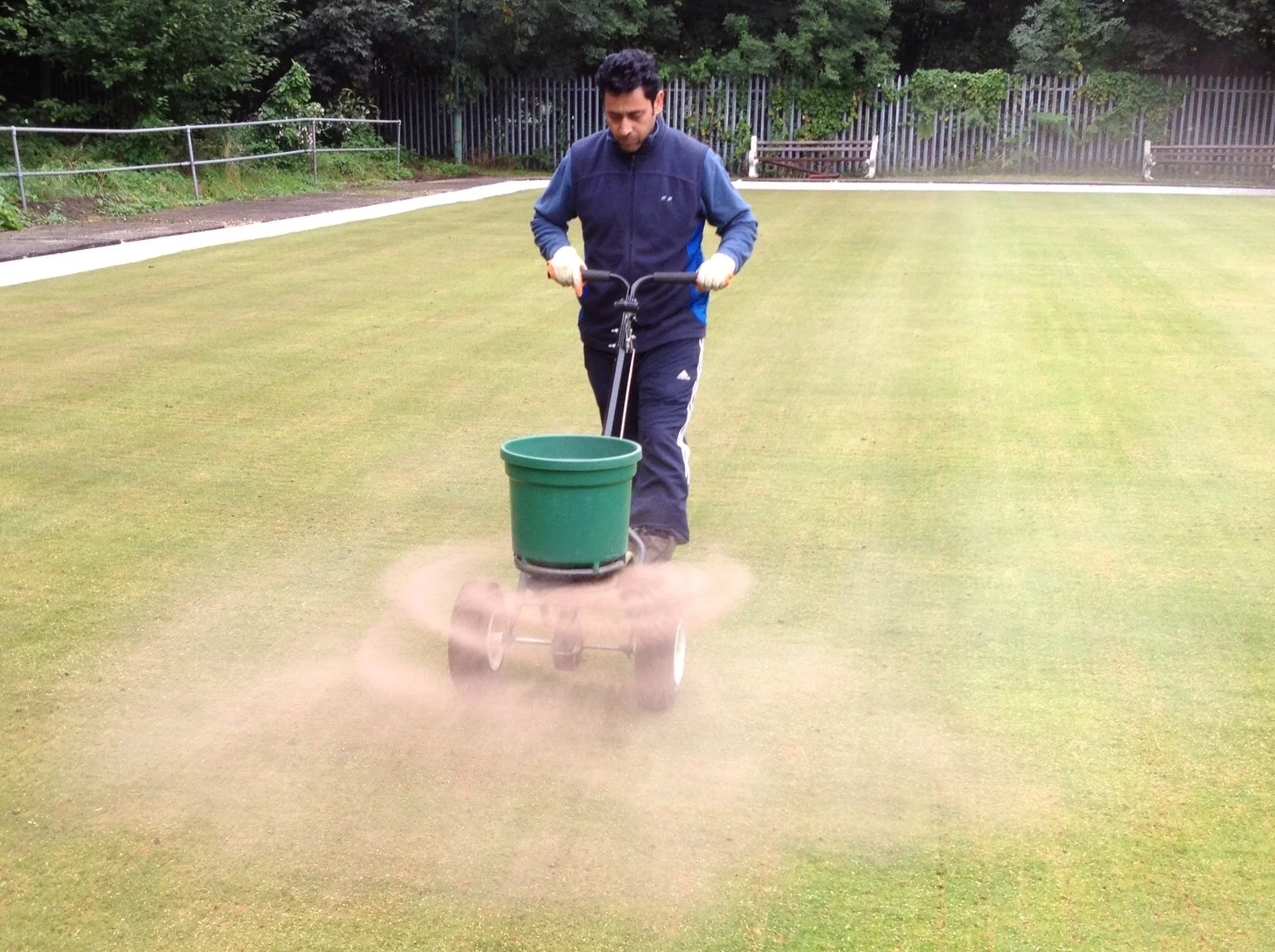
Having removed some of those weed grasses by scarification then you need to put back the best fine turf seed mixtures. We supply the best mixtures from a leading seed company which now consist of modern dwarf ryegrasses that are hardwearing, deeper rooted and have the ability to flourish in difficult conditions outperforming traditional Fescue/Bent mixtures. Typically you would apply 20kg to an average sized Green. but you may need up to 60kg of seed if there are problems with grass coverage over the green. Don’t use DIY store seed as it will probably be more expensive and almost certainly inferior to these professional mixtures. Apply using a rotary spreader for even coverage. Nobody can spread grass seed by hand evenly.
Apply good quality Turf Top Dressing.
Normally we suggest a 70:30 Sand:Soil mix in 25kg bags (40 per tonne). Its delivered on a 1 tonne pallet shrink wrapped to ensure you receive it in perfect condition. Kiln dried sand and sterilised soil is used in our Top Dressings. Some suppliers will persuade you to buy it in bulk 1 tonne bags to save a little money. The problem with this is that you have to try and get it out of the bag and into your spreader. The even bigger problem is that if that big bag gets even slightly wet then you will have no chance of spreading it. Some suppliers even try to sell you bulk bags of moist soil and sand which is actually known as ‘Root Zone’. Its the mixture used in construction of golf and bowling greens and totally useless as a Top Dressing. How much you need depends on what type of aeration you have done. Ideally solid tine aeration requires between 1-2 tonnes of Top Dressing, whilst Hollow Tining will require 3-4 tonnes for an average size Green. Application should be done using perfectly dry material in a rotary spreader for best results. Dry Top Dressing will help to ‘bounce’ the seed into the scarification slits and ensure the best chance of germination. Never put piles of top dressing on the green and then try to locally spread it. Get the spreading done evenly with a rotary spreader and there should be no need to drag the Green using a Drag Mat or Drag Brush.
Do not be tempted to apply your Autumn & Winter fertiliser during the renovation process. Almost all Autumn & Winter fertilisers contain some iron and whilst it will do a great job on blackening moss it also hardens the turf and has a stunting effect on germinating grass seed. its much better left for a month until the grass has germinated and is growing strongly.
Finally put up the ‘Green Closed’ signs and let nature take its course.
Germination during September can occur in 5-7 days whilst Greens sown a month later could take double that time. Sowing after the end of October will rarely result in good germination as soil and air temperatures drop. Most seed requires a minimum of 7degC to germinate and grow.
To arrange a consultation Call 07952 060657 today for advice or email us at turfgearamenity@gmail.com

We are all guilty of saying or doing things that we regret in life and that includes bowlers. Those of you that are charged with the maintenance of your bowling green will know that there is precious little praise for all your hard work but a constant stream of moans and groans about the condition of the green.